
Google Has a Crawler. It Visits Your Site Regularly. And It Has Opinions.
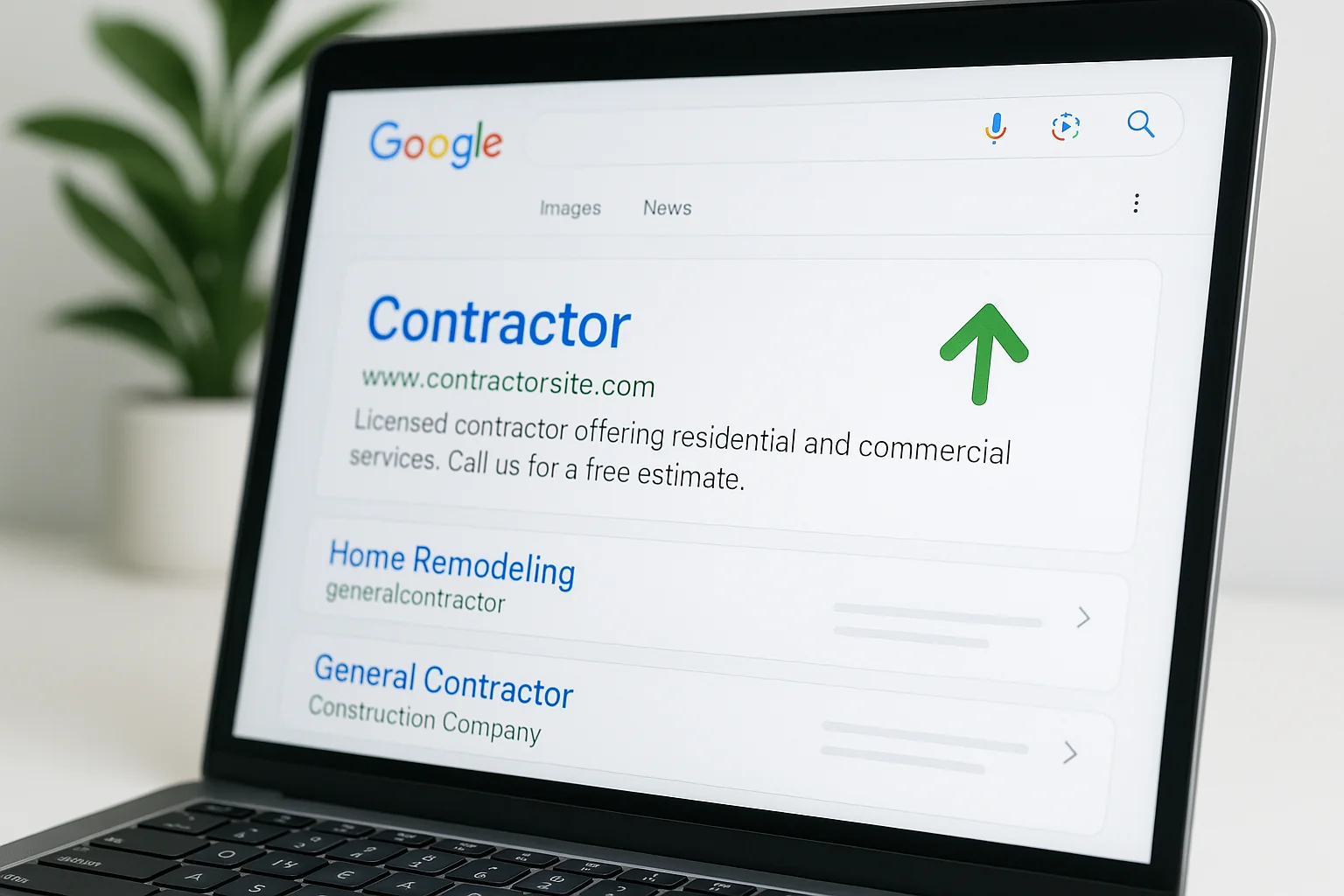
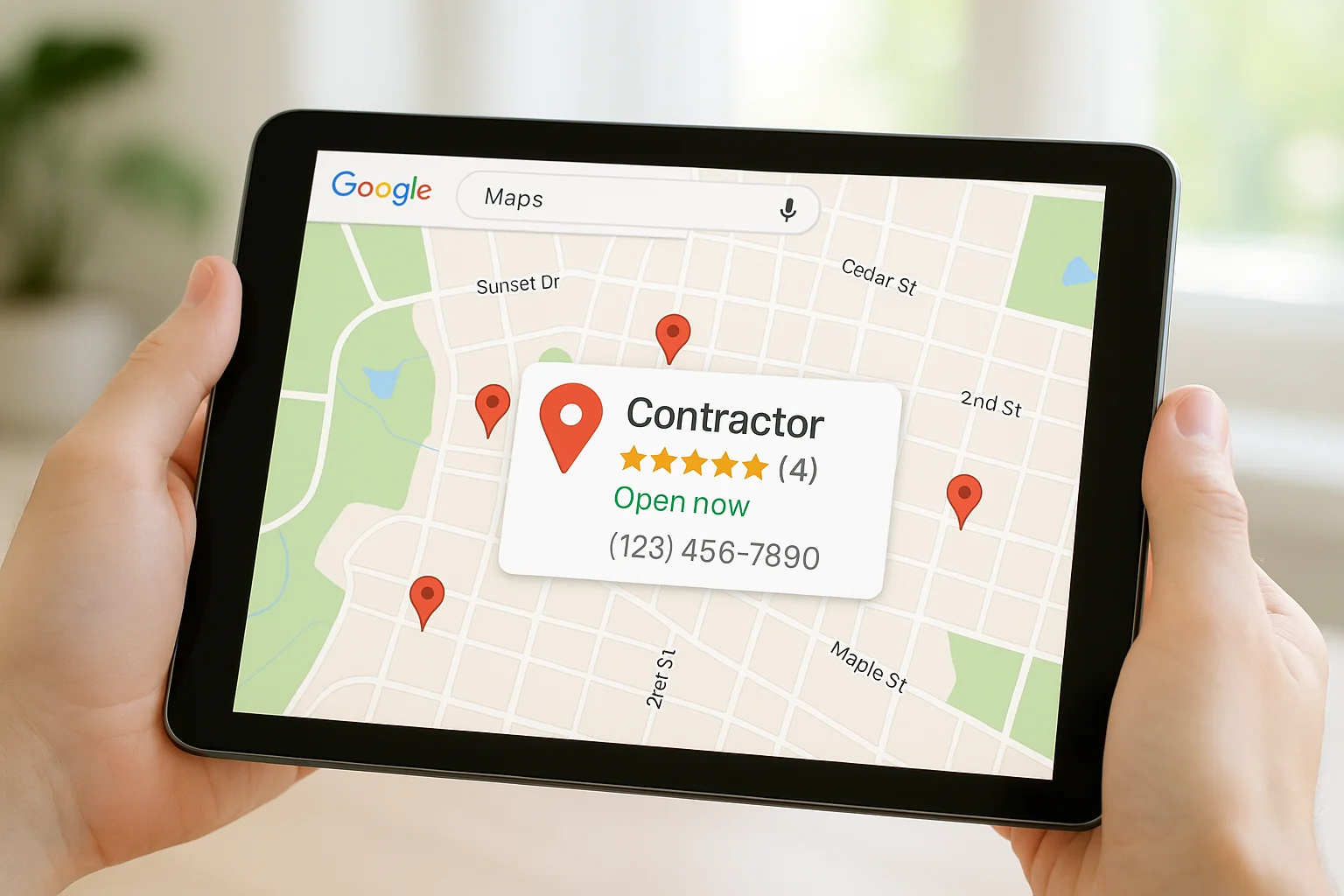
Most tradesmen think about Google the same way they think about the Yellow Pages — it’s a place where people find your business listing. But Google is doing a lot more than just listing your name and phone number. It’s actively crawling your website, measuring its performance, evaluating its content, and using all of that information to decide where you show up in search results.
If your website is slow, hard to use on mobile, or missing basic security features, Google knows — and it’s ranking you lower because of it.
Let’s talk about exactly what Google is looking at and what it means for your business.
Core Web Vitals: Google’s Report Card for Your Website
In 2021, Google started using what they call “Core Web Vitals” as official ranking factors. These are three specific measurements that evaluate how your website performs for real users:
Largest Contentful Paint (LCP) — How long does it take for the main content on your page to load? Google wants this under 2.5 seconds. Most contractor websites on cheap shared hosting take 5 to 15 seconds. That’s an automatic penalty.
First Input Delay (FID) / Interaction to Next Paint (INP) — When a user taps a button or link on your site, how long before the page responds? If your site freezes or lags when someone tries to tap your phone number, Google counts that against you.
Cumulative Layout Shift (CLS) — Does your page content jump around while it’s loading? You know those sites where you try to tap something and then an image loads and pushes everything down? That’s layout shift, and Google measures it.
In plain English: Google is grading your website on speed, responsiveness, and visual stability. If your site fails any of these tests, you’re getting pushed down in search results.
How Site Speed Directly Affects Your Ranking
This isn’t guesswork or theory. Google has publicly stated that page speed is a ranking factor, and they’ve tightened the requirements over time.
Here’s what the data shows:
- Sites that load in under 2 seconds have an average bounce rate of about 9%
- Sites that take 5 seconds to load see bounce rates jump to 38%
- At 10 seconds, the bounce rate hits 58%
When Google sees that people land on your site and immediately leave (bounce), it interprets that as a signal that your site isn’t giving visitors what they’re looking for. Over time, this pushes your ranking down.
The majority of contractor websites we’ve tested are sitting in the 15-40 range on Google’s PageSpeed Insights (out of 100). Modern, well-built sites score 90-100. That gap is directly visible in search rankings.
Mobile-Friendliness Is Not Optional
Google switched to “mobile-first indexing” in 2019 and completed the rollout in 2021. That means Google primarily uses the mobile version of your website to determine your ranking — not the desktop version.
If your website:
- Has text that’s too small to read on a phone
- Requires horizontal scrolling
- Has buttons and links that are too close together to tap accurately
- Doesn’t resize properly on different screen sizes
…then Google is seeing a broken website, and it’s ranking you accordingly.
This matters enormously for tradesmen because the majority of your potential customers are searching on their phones. According to Google, 76% of people who search for something local on their smartphone visit a business within 24 hours, and 28% of those searches result in a purchase. If your mobile site is broken, you’re missing out on the most motivated customers.
The HTTPS Factor
Remember when websites started showing that little padlock icon in the browser bar? That padlock means the site uses HTTPS — a secure, encrypted connection. Google has been using HTTPS as a ranking factor since 2014.
If your website still runs on plain HTTP (no padlock), two things happen:
- Google ranks you lower than competitors who have HTTPS.
- Chrome shows a “Not Secure” warning next to your URL. When a potential customer sees “Not Secure” on a plumber’s website, they’re going to assume your business is sketchy — even if you’ve been in business for 20 years.
SSL certificates (the technology behind HTTPS) used to cost money, but today they’re available for free. There’s absolutely no reason for any business website to be running without one.
What Google’s Crawlers Check (The Full List)
Here’s a simplified breakdown of everything Google evaluates when it crawls your website:
- Page speed — load time on desktop and mobile
- Mobile usability — proper formatting on phones and tablets
- Security — HTTPS/SSL certificate presence
- Content quality — unique, helpful content vs thin or duplicated text
- Page structure — proper use of headings (H1, H2, H3), meta descriptions, title tags
- Internal linking — how well your pages connect to each other
- Image optimization — file sizes, alt text, proper formatting
- Schema markup — structured data that helps Google understand your business type, services, and location
- Crawl errors — broken links, 404 pages, redirect chains
Every one of these factors contributes to where you show up when someone searches for your trade in your city.
Free Tools to Check What Google Thinks of Your Site
You don’t need to be a tech expert to see how Google evaluates your website. Here are free tools you can use right now:
Google PageSpeed Insights (pagespeed.web.dev) — Enter your URL and get a detailed speed and performance report. Focus on the mobile score.
Google Search Console (search.google.com/search-console) — Free tool from Google that shows you exactly what issues Google has found with your site, what search terms people use to find you, and how often you appear in results.
Google Mobile-Friendly Test (search.google.com/test/mobile-friendly) — Tells you whether Google considers your site mobile-friendly and highlights specific issues.
GTmetrix (gtmetrix.com) — Another speed testing tool that gives you detailed recommendations for improving load time.
What This Means for Your Business
Google isn’t being difficult for the sake of being difficult. They’re trying to send users to websites that load fast, work on phones, and provide a good experience. When your website fails these tests, Google is essentially saying “we don’t trust this site enough to recommend it to searchers.”
The result? You drop in rankings. Your competitors who invested in a modern, fast, mobile-friendly website move up. And the homeowners who would have called you are calling someone else instead.
The good news is that every single one of these issues is fixable. A modern website built on up-to-date technology, hosted on proper infrastructure, will score 90+ on PageSpeed Insights, pass every mobile usability test, and give Google exactly what it’s looking for.
The question isn’t whether you can afford to fix your website. It’s whether you can afford not to.
Webpage Workmen
We build modern, lightning-fast websites exclusively for tradesmen. Plumbers, electricians, HVAC techs, roofers — we speak your language and we are here to help your business grow online.