The Three Spots That Get All the Clicks
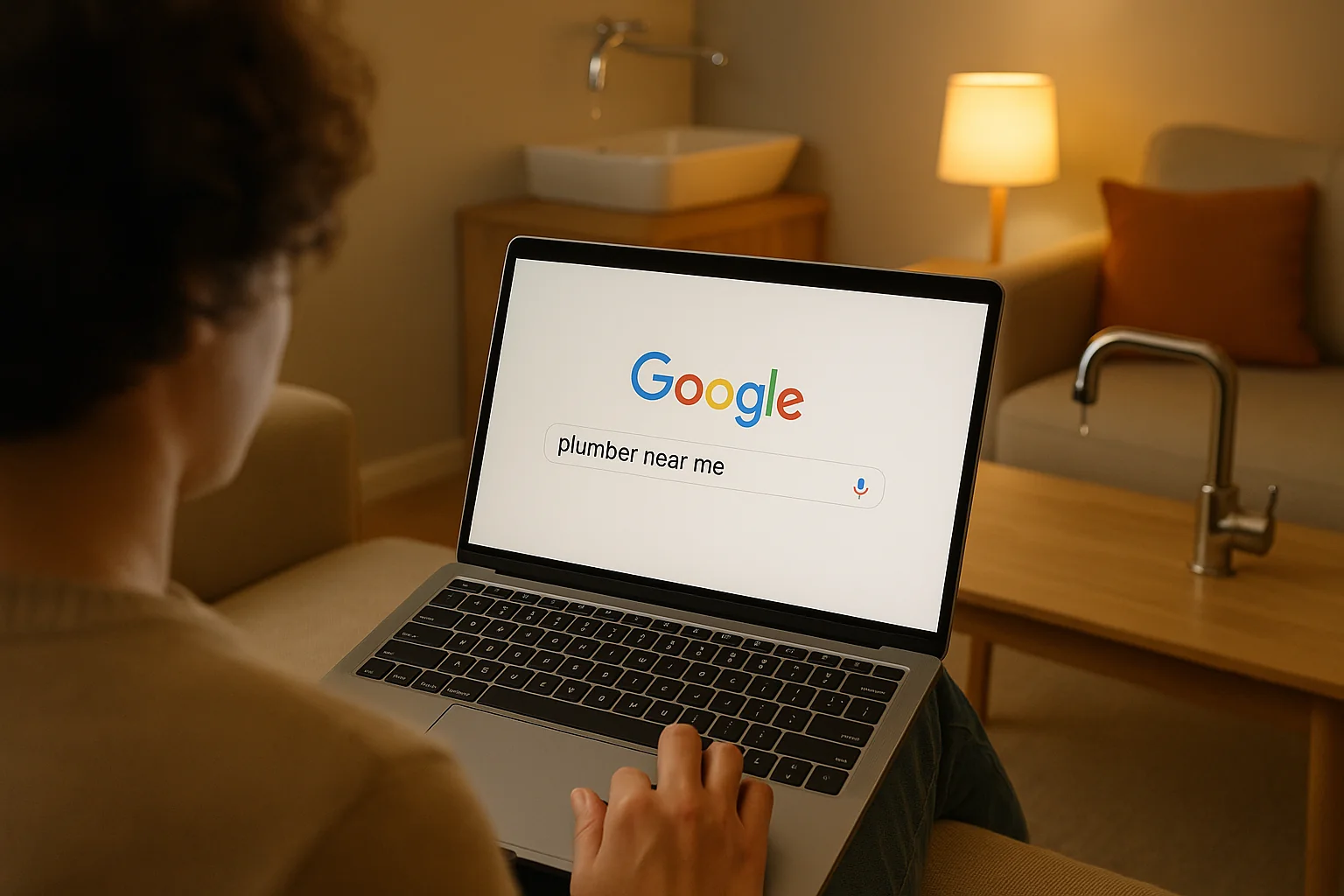
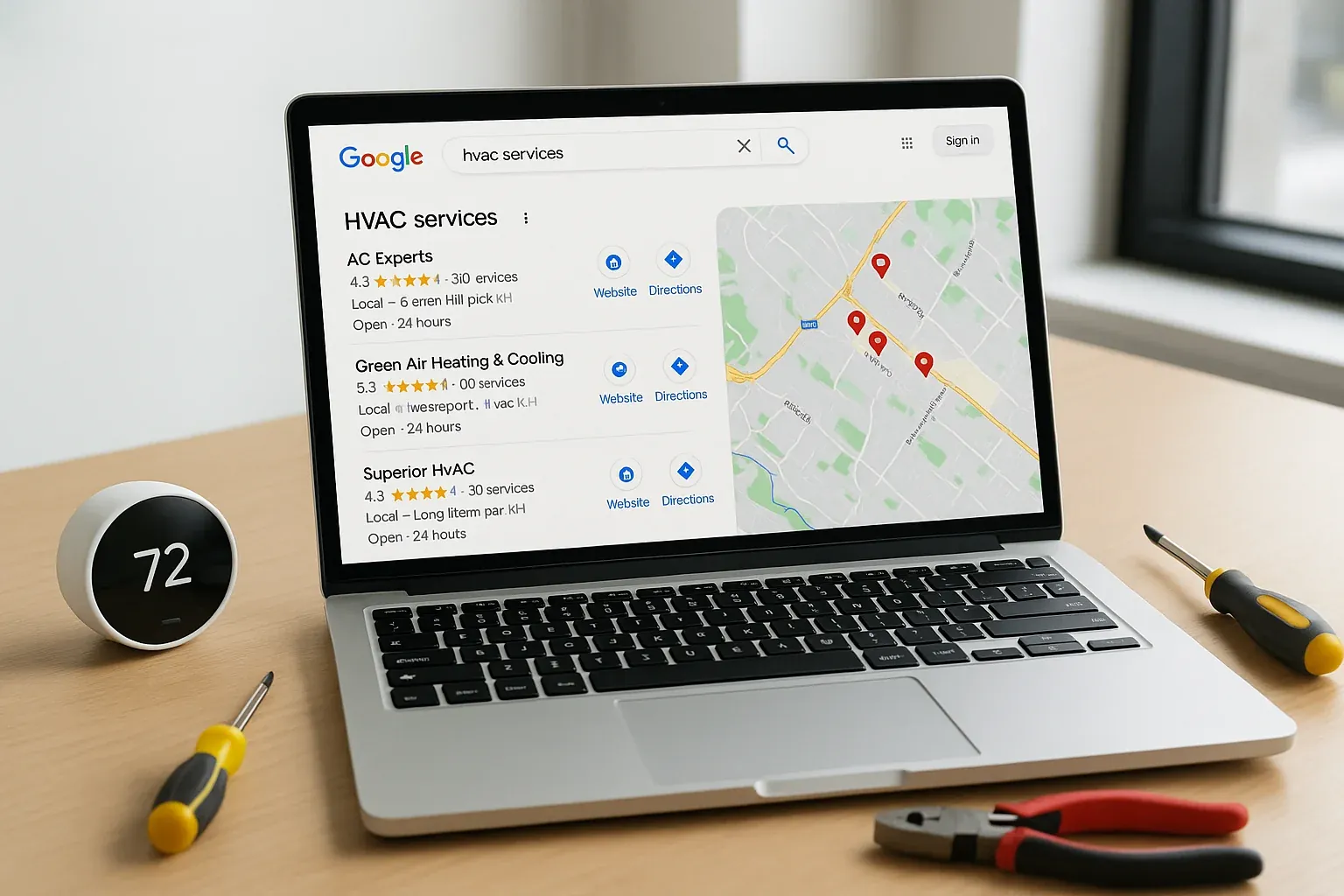
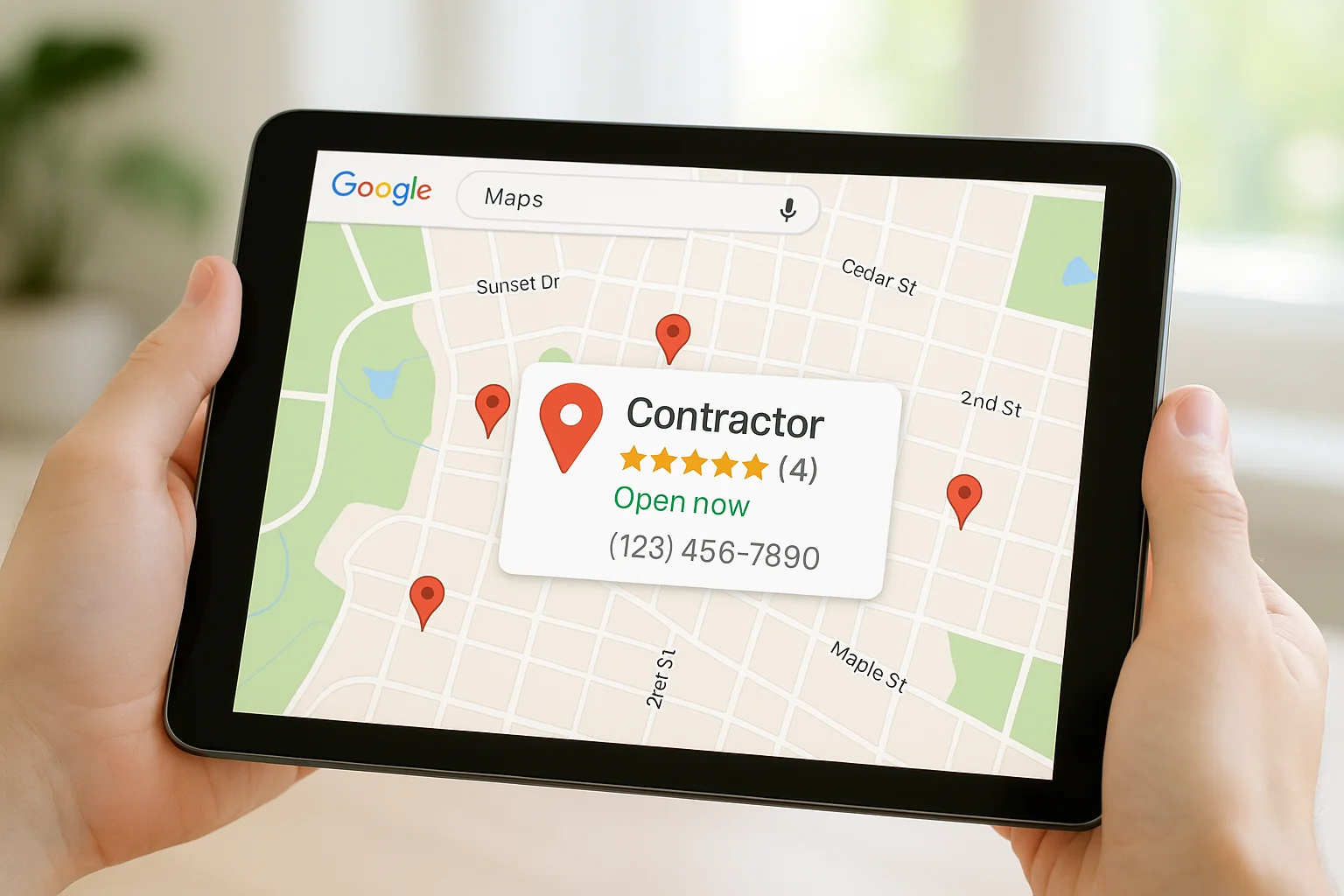
When someone searches “plumber near me” or “electrician in [city],” the first thing they see is not the regular search results. It is the Google Maps Local Pack — that box showing three businesses on a map with their name, rating, phone number, and hours.
This Local Pack dominates local service searches. According to research by Moz, the Local Pack appears in 93% of searches with local intent. And studies consistently show that roughly 42% of local searchers click on results within the Map Pack. For trades businesses, getting into those three spots is the difference between a phone that rings constantly and one that stays silent.
The good news: you do not need to be an SEO expert to improve your chances. The ranking factors for the Local Pack are well understood, and most of them are things you can control.
The Three Factors Google Uses to Rank the Local Pack
Google has publicly stated that Local Pack rankings are based on three factors:
1. Relevance
How well does your business profile match what the searcher is looking for? If someone searches “emergency plumber,” Google needs to see that you are a plumber and that you offer emergency services. This comes from your Google Business Profile categories, your business description, and the content on your website.
2. Distance
How close is your business to the person searching? This is the factor you have the least control over. Google uses the searcher’s location and your business address to determine proximity. You cannot fake your location, and you should never try — Google is very good at detecting fake addresses and will suspend your profile for it.
3. Prominence
How well-known and well-regarded is your business? This is determined by your review count and rating, your website’s overall SEO strength, your local citations (directories listing your business), and how much engagement your Google Business Profile gets. This is where you have the most opportunity to compete.
Optimizing Your Google Business Profile for the Local Pack
Your Google Business Profile (formerly Google My Business) is the single most important factor in Local Pack ranking. Here is how to optimize it:
Choose the Right Primary Category
This is critical. Your primary category tells Google exactly what kind of business you are. Choose the most specific category available:
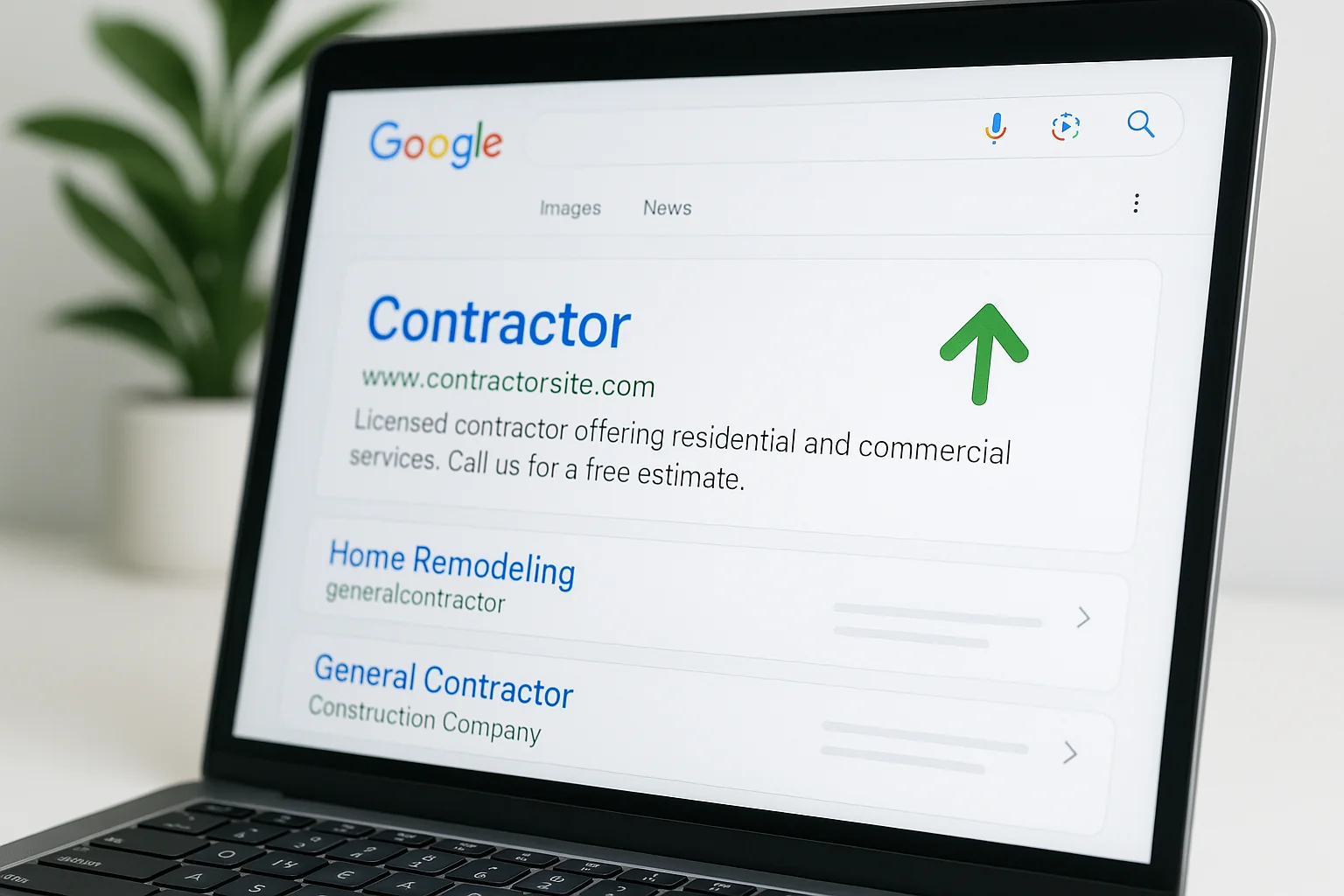
- Instead of “Contractor,” use “Plumber” or “Electrician” or “HVAC Contractor”
- You can add additional categories for secondary services, but your primary category should be your core business
Fill Out Every Single Field
Google favors complete profiles. That means:
- Business name (your real business name — do not stuff keywords in it)
- Address (must be your real, verified address)
- Phone number (local number, not a tracking number)
- Website URL
- Business hours (keep them accurate and update for holidays)
- Service area (if you are a service-area business that goes to customers)
- Business description (use all 750 characters — include your services and areas served)
- Services list (add every service you offer with descriptions)
- Attributes (licensing, certifications, payment methods, etc.)
Post Regular Updates
Google Business Profile has a “Posts” feature that most contractors completely ignore. Posting weekly updates tells Google your profile is active and gives searchers more reasons to choose you. Post about:
- Completed projects (with photos)
- Seasonal tips and reminders
- Special offers or promotions
- New services you have added
- Community involvement
Posts expire after seven days but remain visible in your profile history. The activity signal matters even after the post is no longer prominently displayed.
Reviews: The Ranking Factor You Can Influence the Most
Reviews are the most powerful lever you have for Local Pack ranking. Both the quantity and quality of your reviews directly affect your position.
Review count matters. A business with 150 reviews will generally outrank a business with 15 reviews, all else being equal. The data from multiple local SEO studies confirms that review count is one of the strongest Local Pack ranking factors.
Review rating matters, but not as much as you think. You do not need a perfect 5.0. In fact, a 4.7 or 4.8 with a high volume of reviews is more compelling (and more credible) than a perfect 5.0 with only a handful. Anything above 4.2 is generally competitive.
Review velocity matters. Google pays attention to how consistently you get reviews. A steady stream of 2-3 reviews per week is far better than 50 reviews in one month followed by silence. This steady pace signals that your business is consistently active and serving customers.
Review content matters. Reviews that mention specific services (“They replaced our water heater”) and locations (“great plumber here in West Tampa”) provide keyword signals to Google. You cannot tell customers what to write, but you can encourage them to describe the work that was done.
Owner responses matter. Responding to every review — positive and negative — signals engagement and professionalism. Keep positive responses short and genuine. For negative reviews, respond professionally, address the concern, and offer to resolve it offline.
NAP Consistency: The Boring Factor That Trips Everyone Up
NAP stands for Name, Address, and Phone number. And it needs to be exactly the same everywhere your business appears online.
That means your business name on Google must match your business name on Yelp, which must match your listing on Angi, which must match your website, which must match the Better Business Bureau — all of them, exactly.
This sounds trivial, but inconsistencies are surprisingly common:
- “Smith Plumbing” on Google vs “Smith Plumbing LLC” on Yelp vs “Smith Plumbing Co.” on your website
- A phone number on your website that is different from the one on your Google profile
- An old address on a directory listing you forgot to update when you moved
These inconsistencies confuse Google. If Google is not confident that all these listings refer to the same business, it dilutes your prominence signal and hurts your Local Pack ranking.
Do an audit. Search for your business name on Google and check every directory listing that appears. Make sure your name, address, and phone number are identical everywhere.
Photos and Engagement
Google tracks how users interact with your profile, and engagement signals feed back into ranking. Profiles with more photos, more reviews, and more clicks tend to rank higher.
Upload photos regularly. Businesses with more than 100 photos on their Google Business Profile get 520% more calls than the average business, according to Google’s own data. Upload photos of completed projects, your team, your trucks, your office — anything that is real and relevant.
Respond to questions. The Q&A feature on Google Business Profile is often neglected. If someone asks a question, answer it quickly. You can even proactively add frequently asked questions and answer them yourself.
Your Website Still Matters
Your Google Business Profile does not exist in isolation. The strength of your actual website plays a role in Local Pack ranking. A well-built website with strong local SEO signals — service area pages, local content, proper meta tags, and good performance — boosts your overall prominence and relevance.
Make sure your website:
- Clearly lists your service area
- Has individual pages for each service
- Includes your NAP information consistently
- Loads fast on mobile devices
- Has an SSL certificate (HTTPS)
What This Means for Your Business
The Local Pack is the most valuable real estate in local search. Three businesses get the lion’s share of clicks, calls, and customers. Everything outside those three spots gets significantly less visibility.
Getting into the Local Pack is not about tricks or shortcuts. It is about having a complete, accurate, and active Google Business Profile backed by a steady stream of real reviews and a solid website. Most of your competitors are doing the bare minimum — they claimed their profile years ago and have not touched it since.
That is your advantage. Take the time to optimize your profile, actively collect reviews, post regular updates, and keep your information consistent across the web. The contractors who treat their Google Business Profile like the lead-generation tool it actually is are the ones filling up their schedules. Everyone else is hoping the phone will ring.
Hope is not a strategy. Optimization is.
Webpage Workmen
We build modern, lightning-fast websites exclusively for tradesmen. Plumbers, electricians, HVAC techs, roofers — we speak your language and we are here to help your business grow online.